
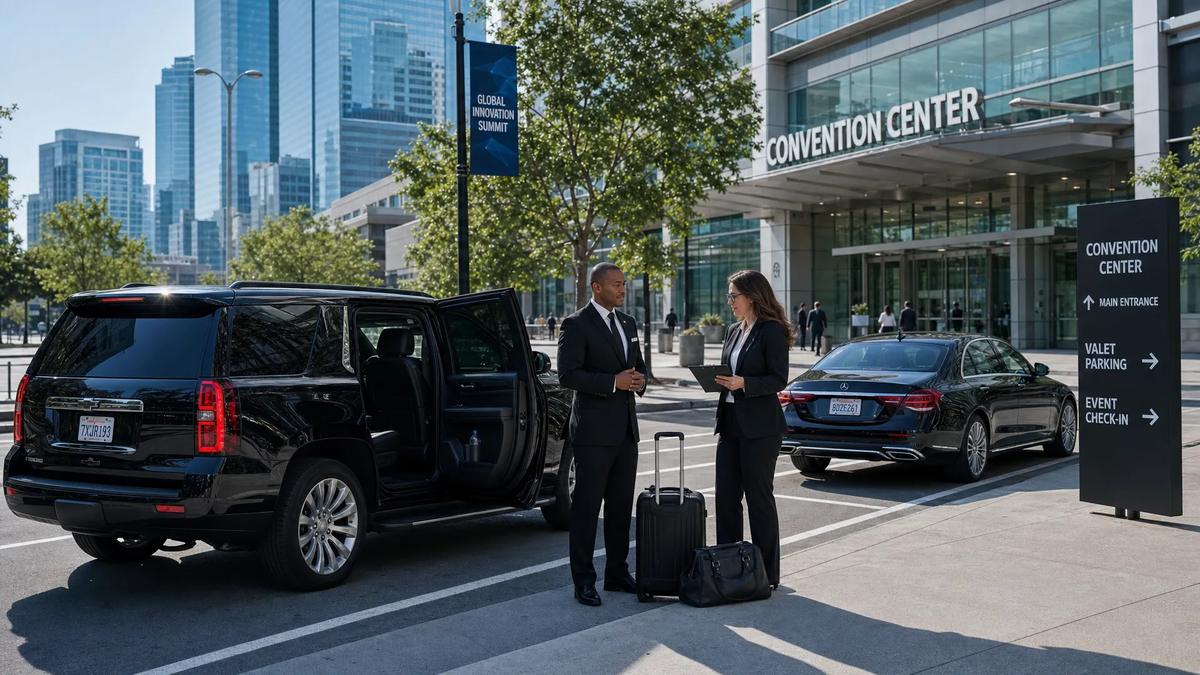
Corporate travel has one job before anything else: get the right people to the right place at the right time. A polished vehicle matters, but for business travelers, the real value is predictability. When a leadership team misses a meeting window, a client waits at the curb, or a group arrives late to a conference session, the transportation problem becomes a business problem.
That is why effective **corporate transportation** is not simply a nicer alternative to driving or using an app. It is a planned mobility system built around schedules, flight changes, venue logistics, group coordination, and professional accountability.
For executive assistants, travel managers, event planners, and operations teams, the goal is not just to book a ride. The goal is to remove uncertainty from every movement.
Why does on-time corporate transportation require more than a vehicle
Business travel rarely happens in isolation. A single pickup may connect to a flight, a board meeting, a dinner reservation, a site visit, or a keynote start time. If one piece runs late, everything after it gets tighter.
The challenge is even greater when multiple travelers are involved. One executive may be landing at one terminal while another is leaving a hotel. A sales team may need to arrive together, not five minutes apart. A VIP guest may need discretion and a smooth handoff. A conference group may need staged departures so nobody is waiting in a crowded lobby.
On-time transportation depends on details that standard point-to-point rides often overlook, including pickup windows, traffic patterns, terminal changes, luggage volume, group size, venue loading zones, and communication protocols.
A professional provider should treat each trip as part of a larger schedule. That means confirming the route, assigning the right vehicle, preparing the chauffeur, monitoring changes, and keeping dispatch available if plans shift.
Build the itinerary backward from the commitment.
The most reliable corporate transportation plans start with the fixed commitment, then work backward. Instead of asking, “What time should the car arrive?” ask, “What time must the traveler be inside, checked in, seated, or ready?”
This approach is especially important for airports, conferences, campus visits, board meetings, client dinners, and roadshows. The scheduled arrival time should account for more than the drive itself. It should also include lobby time, elevator delays, security desks, venue entrances, traffic near major event sites, and time for the group to gather.
Business travel scenario — Timing factor to plan around — Practical transportation note
Airport departure — Check-in, security, luggage, traffic to terminal — Schedule pickup with a buffer, not just the estimated drive time
Airport arrival — Flight status, baggage claim, terminal pickup rules — Share flight details so the service can monitor changes
Executive roadshow — Multiple stops and strict meeting windows — Build a route plan with realistic stop-to-stop timing
Conference or trade show — Peak traffic, venue congestion, group staging — Use departure waves for larger teams or VIP groups
Client dinner or event — Reservation time, valet congestion, and curb access — Confirm the exact entrance or pickup point in advance
This kind of planning may feel more detailed than a typical ride request, but it prevents the common delays that happen between the curb and the actual destination.
The chauffeur is part of the punctuality plan.
A corporate ride depends heavily on the person behind the wheel. The vehicle can be immaculate, but if the chauffeur is not punctual, prepared, communicative, and familiar with professional travel expectations, the experience will suffer.
A business-class chauffeur should arrive prepared, understand the itinerary, communicate clearly, drive safely, respect privacy, and adapt calmly when plans change. Those standards are not extras. They are the foundation of dependable corporate mobility.
Grand Limousine’s focus on professional chauffeurs aligns with what business travelers need most: punctuality, discretion, and a polished experience from pickup to drop-off. If you are evaluating providers, it helps to compare them against the standards a professional chauffeur should always deliver, especially for executive and client-facing travel.
The best chauffeur experiences feel calm because the preparation happened before the passenger stepped into the vehicle.
Airport transfers are where reliability is tested.
Airport transportation is one of the clearest examples of why corporate travel needs planning. Flights arrive early, land late, change gates, switch terminals, or get delayed by weather. For business travelers, the ground transfer must respond to those changes quickly.
The U.S. Bureau of Transportation Statistics maintains detailed airline on-time performance data, which highlights how variable air travel can be. For companies, that variability makes flight tracking and responsive dispatch especially valuable.
A strong airport transfer plan should include the airline, flight number, arrival or departure time, terminal details if available, passenger names, luggage expectations, and a clear meeting location. For arriving travelers, the chauffeur or dispatch team should understand whether the passenger will need baggage claim time or prefers a direct pickup when ready.
Grand Limousine offers airport transfers with flight tracking and 24/7 service, which are essential for travelers who cannot afford confusion after landing. For a deeper look at what matters in this specific use case, review what a reliable airport transfer service should include.
Match the vehicle to the schedule, not just the status
Choosing the right vehicle is not only about image. It affects boarding time, luggage fit, group coordination, comfort, and arrival efficiency. A sedan may be ideal for one executive traveling light, while an SUV may be better for airport luggage or a small team. A limousine may suit VIP hospitality, while party buses or larger luxury vehicles can support group transportation for events and corporate outings.
The vehicle should match the passenger count, itinerary, trip purpose, and luggage profile. If the vehicle is too small, boarding takes longer and comfort drops. If the group is split across too many vehicles without coordination, arrival timing becomes harder to control.
Transportation need — Better-fit vehicle category — Why does it help with punctuality
Solo executive transfer — Executive car — Quick boarding and efficient point-to-point movement
Small team with luggage — SUV — More space for passengers and bags without slowing departure
VIP client hospitality — Limousine — Elevated experience with a planned, polished arrival
Corporate group outing — Party bus or group vehicle — Keeps the team together and reduces scattered arrivals
Multi-stop business day — Executive car or SUV — Supports flexible routing and waiting between appointments
The right choice is the one that makes the trip smoother, not simply the one that looks the most impressive.
Group transportation needs choreography.
Moving one traveler on time is about precision. Moving a team on time is about choreography.
For corporate meetings, offsites, conferences, training events, and client entertainment, the biggest delays often come from human coordination. People leave rooms at different times, gather in different lobbies, forget bags, or misunderstand pickup points. A well-built transportation plan reduces those risks.
The first step is assigning one transportation lead. This person does not need to manage every detail manually, but they should be the central contact for schedule changes, passenger updates, and final confirmations. When dispatch, chauffeurs, and passengers all know who is coordinating, small issues are resolved faster.
For group movements, confirm these details before the service date:
- Final passenger count and names, if available
- Pickup and drop-off addresses with entrance details
- Departure time, arrival target, and schedule buffer
- Luggage, presentation materials, or event equipment
- Primary contact and backup contact phone numbers
- Any VIP, privacy, or special handling considerations
This information gives the transportation provider what it needs to plan accurately. It also keeps the group from making decisions under pressure at the curb.
Corporate transportation is an experience clients notice
When clients, executives, investors, speakers, or VIP guests are involved, transportation becomes part of the company’s first impression. A smooth pickup tells guests the host is organized. A late, confusing, or uncomfortable ride sends the opposite signal.
This is where luxury transportation adds practical value beyond appearance. A professional vehicle, a prepared chauffeur, clear pickup instructions, and reliable timing help guests feel expected and cared for. The experience is not just about comfort; it is about confidence.
That is one reason many companies use chauffeured transportation for client dinners, board meetings, investor visits, executive airport transfers, and high-value events. The polished experience supports the relationship while the operational discipline protects the schedule. Grand Limousine explains more about the real value luxury transportation can add when reliability and guest experience both matter.
Avoid the common mistakes that make teams late.
Many corporate transportation issues start with incomplete planning rather than bad luck. Traffic and flight delays are real, but the impact is much worse when the ride was booked with vague timing or missing details.
One common mistake is booking based only on map-estimated drive time. Navigation apps may estimate 22 minutes, but they do not know that your team needs five minutes to gather, three minutes to load bags, and ten minutes to get through a convention center entrance.
Another mistake is treating a group ride like an individual ride. If ten people need to depart at 7:30 a.m., the vehicle should not be planned as if everyone will be standing outside at exactly 7:30. For larger groups, the schedule should include staging time and clear instructions.
A third mistake is waiting too long to reserve transportation during peak travel periods. Major conferences, sporting events, holidays, and citywide conventions can tighten vehicle availability and increase traffic around hotels, airports, and venues. Booking early gives the provider more room to assign the right vehicle and prepare the route.
What to provide when booking corporate transportation
The more precise the booking details, the smoother the ride. A reliable provider can help refine the plan, but the initial request should include enough information to understand the business objective.
Detail to provide — Why it matters
Passenger count — Determines vehicle size and boarding logistics
Pickup and drop-off addresses — Allows route planning and entrance confirmation
Desired arrival time — Helps build the schedule backward with a buffer
Flight numbers — Enables flight tracking for airport transfers
Luggage count — Prevents space issues that slow departure
Event or meeting type — Helps the chauffeur understand timing sensitivity
Primary contact — Keeps communication clear if plans change
Special requests — Supports VIP handling, privacy, or comfort needs
For recurring corporate travel, it is also useful to document traveler preferences. Some executives prefer quiet rides, some need extra luggage space, and some require specific pickup routines. Capturing those details makes future bookings easier and more consistent.
How Grand Limousine supports time-sensitive business travel
Grand Limousine provides nationwide luxury transportation for corporate travel, airport transfers, events, VIP transport, and group transportation. For companies managing high-stakes schedules, several capabilities matter most: instant booking, transparent pricing, a diverse luxury fleet, professional chauffeurs, 24/7 service and dispatch, and airport transfers with flight tracking.
That combination supports both everyday business travel and more complex itineraries. A single executive airport transfer may require discretion and flight monitoring. A corporate event may require multiple vehicles and group coordination. A client entertainment itinerary may require a polished arrival and a reliable end-of-night pickup.
The key advantage is not only the vehicle. It is having a transportation partner that understands how timing, communication, and service quality work together.
Frequently Asked Questions
What is corporate transportation? Corporate transportation is professional ground transportation for business travel, including executive rides, airport transfers, client transportation, group shuttles, meetings, events, and VIP movements.
How far in advance should I book corporate transportation? Book as early as possible, especially for airport travel, large groups, major events, holidays, conferences, and peak travel periods. Early booking helps secure the right vehicle and allows time to finalize the itinerary.
Why use a chauffeured service instead of a rideshare for business travel? A chauffeured service offers planned scheduling, professional chauffeurs, clearer accountability, vehicle selection, and dispatch support. That structure is valuable when timing, privacy, and client experience matter.
What details should I share for an airport transfer? Share the passenger name, airline, flight number, arrival or departure time, luggage needs, pickup location, destination, and primary contact number. Flight tracking is especially helpful when arrival times change.
Can corporate transportation support groups, not just executives? Yes. Corporate transportation can support teams, event guests, conference attendees, VIP groups, and company outings. The provider should match the vehicle and schedule to the group size and itinerary.
Keep your next business trip on schedule.
When a meeting, flight, event, or client experience matters, transportation should be planned with the same care as the agenda. Grand Limousine helps companies move executives, teams, clients, and guests with professional chauffeurs, nationwide service, airport flight tracking, 24/7 availability, and a luxury fleet suited to business travel.
For your next corporate transfer, event, or group movement, book your ride with Grand Limousine and build your schedule around transportation you can trust.